GUITAR SCALES: How to use CAGED to learn scales.
You might have heard of the CAGED system for playing Chords. If you haven’t, here’s our comprehensive guide in printable form!
We also have a whole product based around mastering the CAGED System, Chord Compass.
Most people use CAGED for playing different chord voicings further up the fretboard, but it’s actually just as useful for learning scales and scale shapes!
A common way to learn scales is to memorise numbered scale boxes. These are usually shown like this:
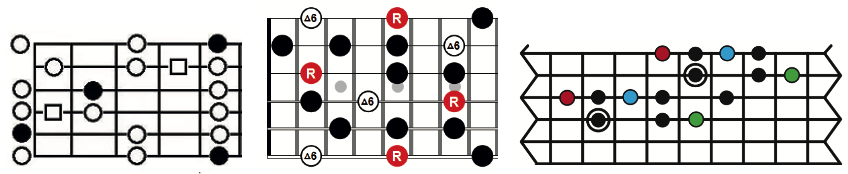
Learning these can be handy for mapping out scales across the fretboard but they don’t offer much in terms of memorability, you’ve got to learn the hard way, which is just to remember them. Did you know you can also use CAGED to make this learning method so much easier to remember?
A brief introduction to the CAGED System:
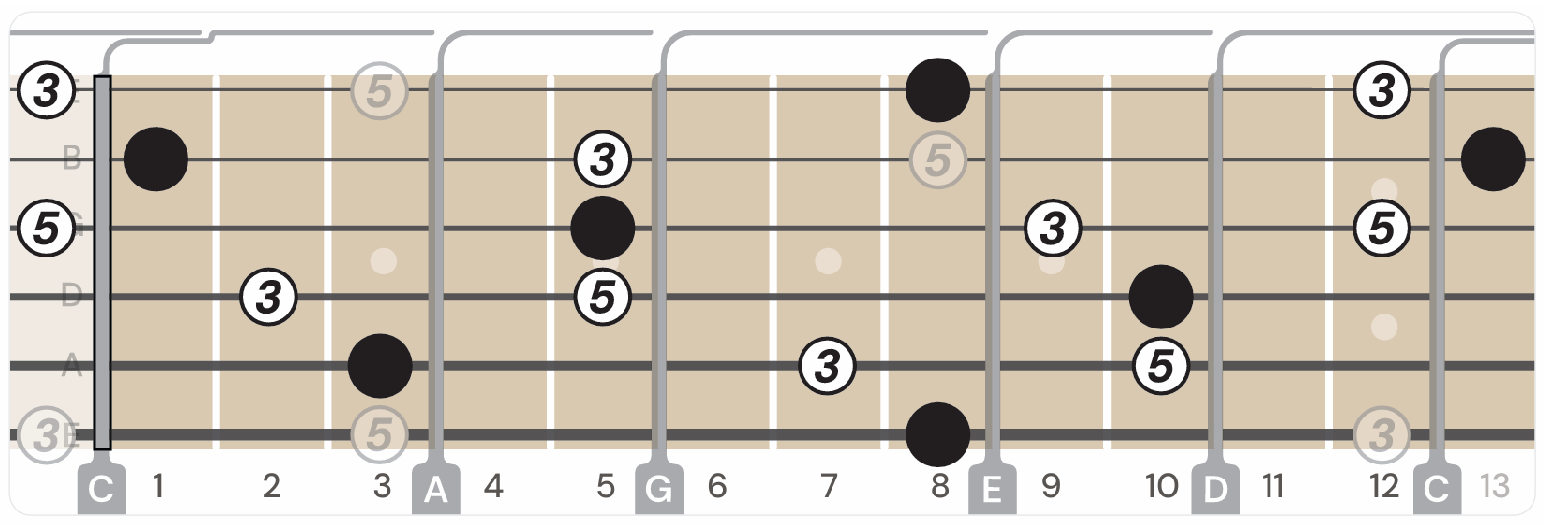
CAGED is a framework for mapping out the fretboard, it uses the 5 open chord shapes: C, A, G, E and D. The whole system is movable and, depending on where you start, it could also be called AGEDC, GEDCA etc.
CAGED is used for playing Major chords, but all you need to do to use it for scales is fill in the blanks! Let’s start with the pentatonics.
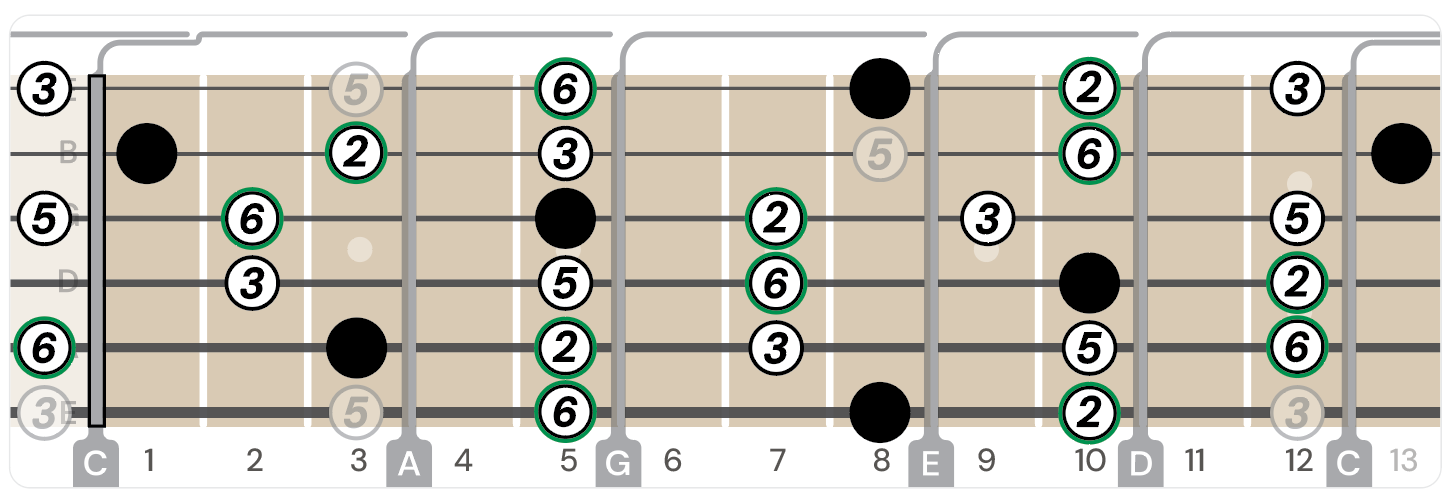
Since we’ve added the 6th degree in, we can now use this system to play both Major and minor scales. Just start on the 6 to play the relative minor!
Adding in the 4th and 7th degrees to create the full Major scale gives us this.
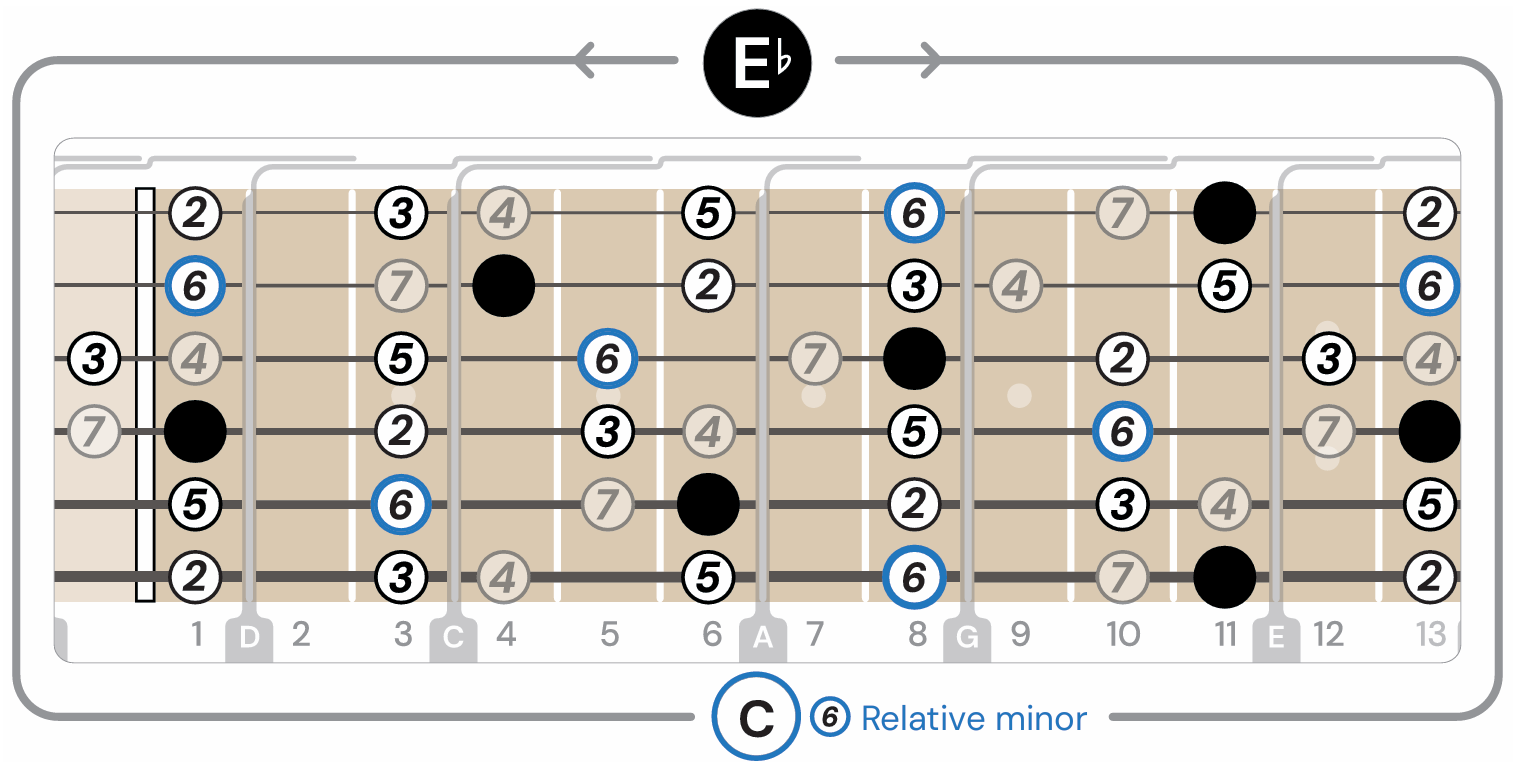
This might look like a confusing sea of intervals, but the CAGED markers allow you to easily demarcate different sections to focus on.
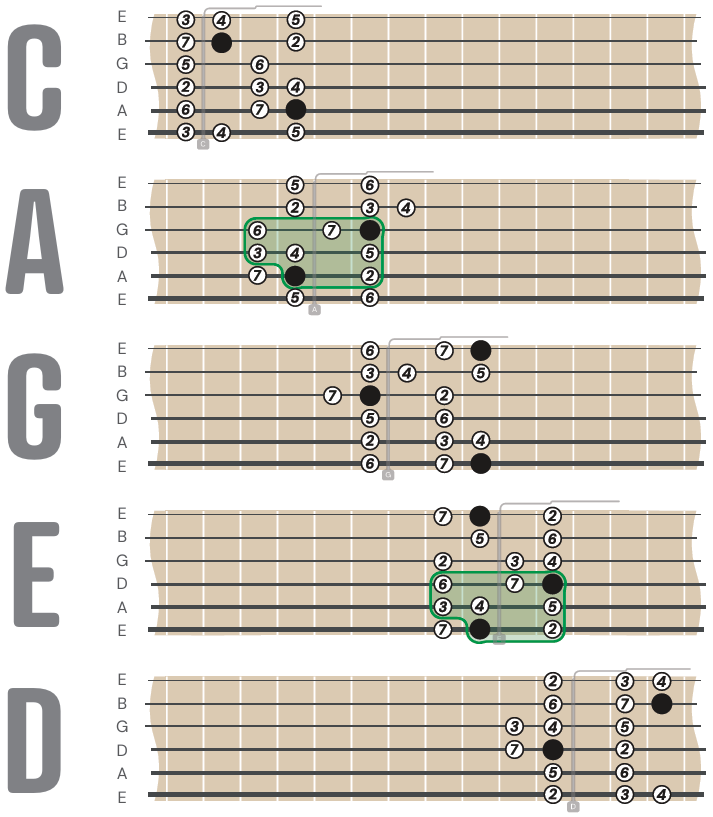
It’s important to remember that these shapes are all movable. Just because you are playing the A shape doesn’t mean you are playing an A scale. If you play it in the open position, where the CAGED marker is at the nut of the guitar, then you are playing the A scale! Just look out for where the tonic note lands.
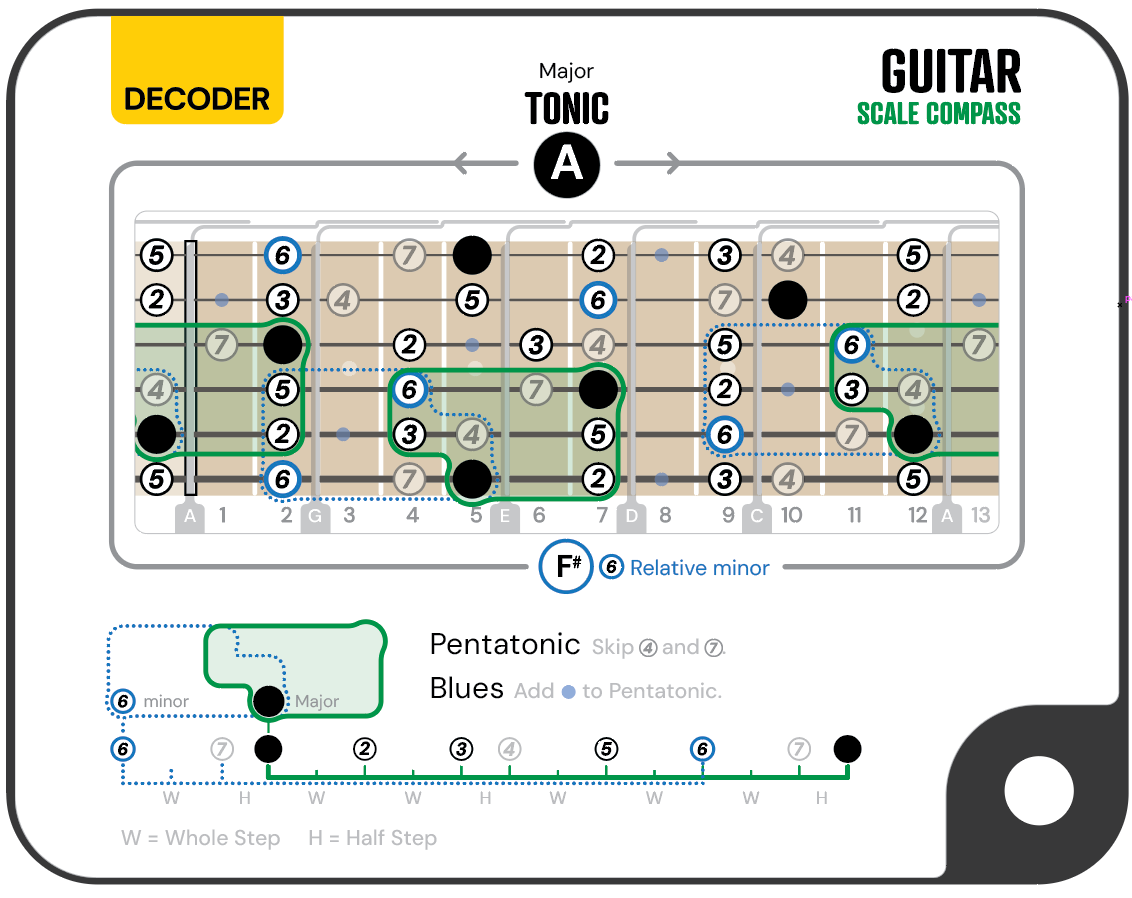
Luckily, we have a product coming out that covers this topic in depth: The Scale Compass. It outlines each shape and shows all of the intervals across the fretboard using the same innovative sliding mechanism as the Chord Compass. Sign up for updates and exclusive discounts now!
Click HERE to download this lesson in printable form.
Check out last week’s lesson about the 3-notes-per-string method HERE.