Beginner Guitar Exercises: Play a 4-chord progression using 6-string chord shapes
A chord progression is a pattern of chords that is played in a certain order.
There are lots of songs that simply repeat the same 4 chords throughout the entire song. The 1 → 5 → 6 → 4 chord progression is a great example of this and forms the basis of thousands of songs. Check out the Axis of Awesome's '4 Chord Song' on YouTube.
This fun video illustrates how many songs can share exactly the same chord progression but sound very different.
We are going to play this progression in the key of G. The 1 → 5 → 6 → 4 in the key of G is G → D → Em → C. These chords can be linked with unique shapes that make these the 'Magic Four' chords.

Building the Progression
These chords can be linked with unique shapes that make these chords 'Magic' guitar chords. The tuning of the guitar helps with this progression.
Two of our fingers never move. Plant your pinky and ring finger on the two high strings as close behind the fret as possible. This anchors our hand and makes our first six-string chord transitions much easier than normal. Use as little pressure as possible.
Slowly fret the four chords shown - don’t worry about timing at the moment. Just get used to the shapes. There are a couple of ways to fret the lower strings, so first try yourself and see what feels most comfortable. Use your thumb for the low E string if you find it comfortable. When you feel ready, try playing the progression slowly around 50bpm.
This progression is best known as being the basis for 'Wonderwall' by Oasis, but you can also use it to play hundreds of other pop hits.
Try This Out: 1 - 5 - 6 - 4
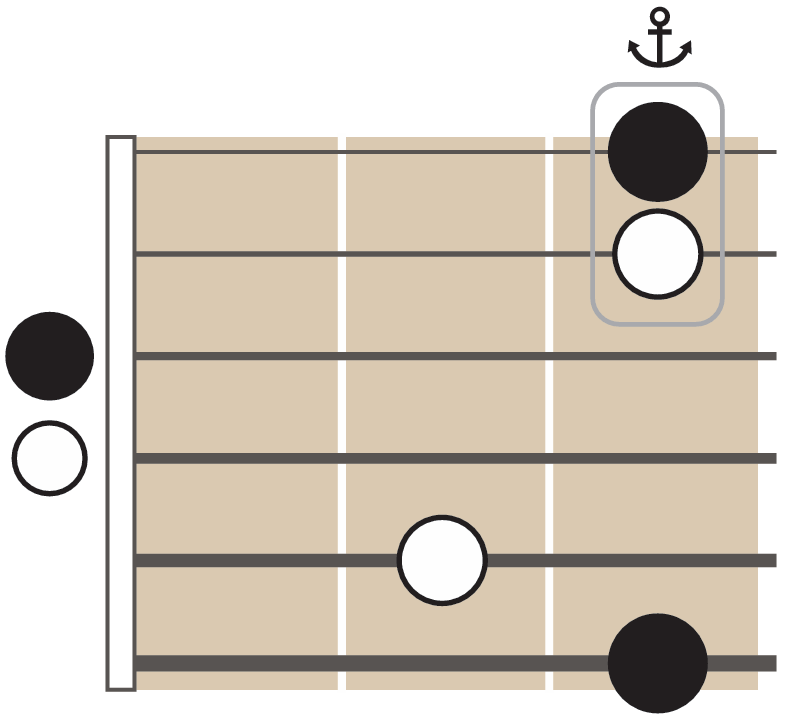
The 1 Chord - G
Pay special attention to the two notes on the high strings at the third fret. These notes never move throughout the entire chord progression. Your pinkie and ring finger hold down the E and B strings and are anchor positions for this entire progression.
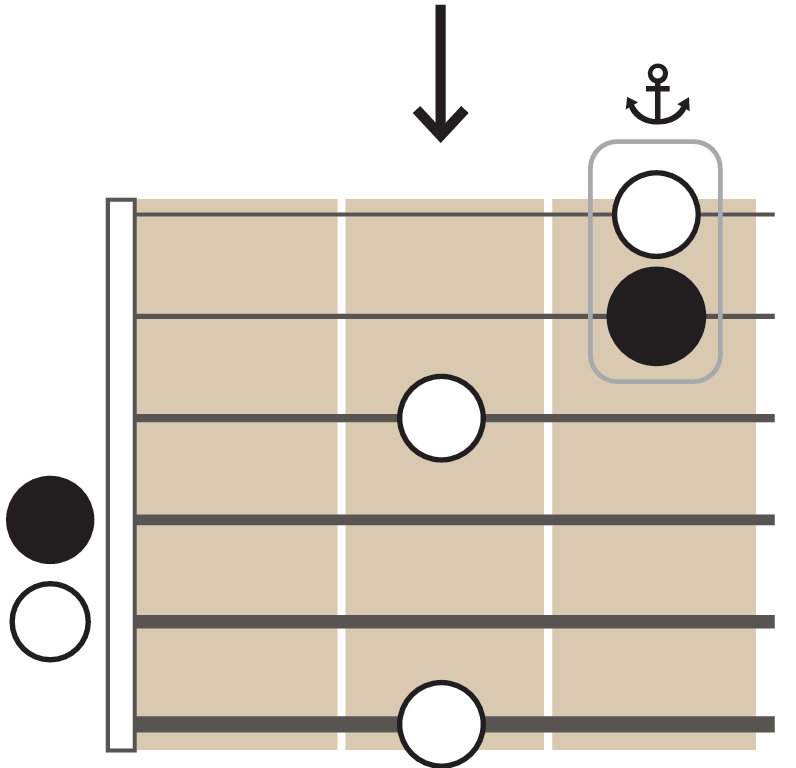
The 5 Chord - D
This chord is not a straight D Major chord. There is an extra accent here, but it works well for any progression in G. We'll explain chord embellishments later, but for now focus on moving your fingers between the G chord and this shape.
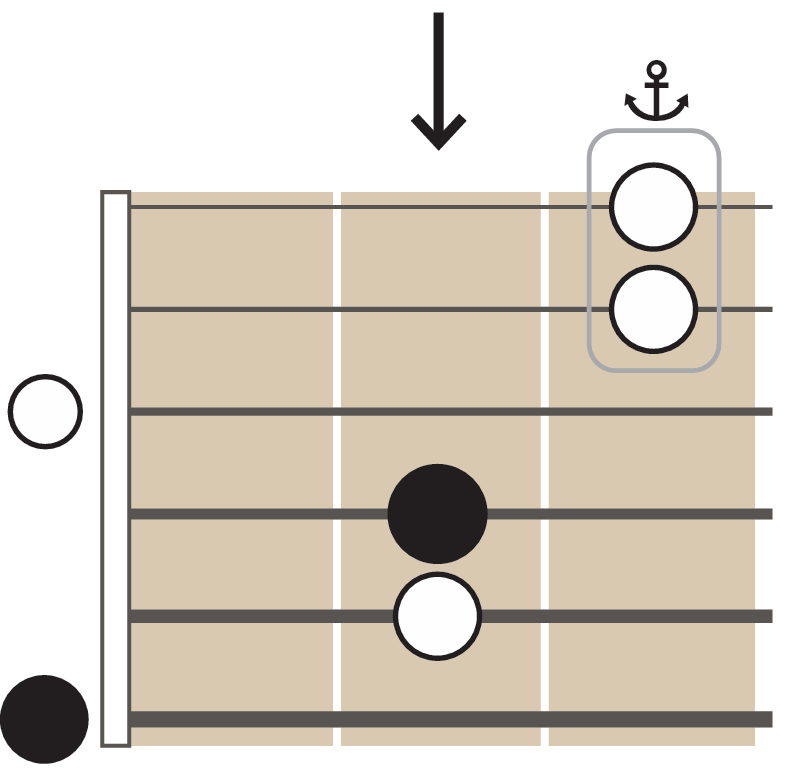
The 6 Chord - Em
The Em shown here includes the anchor G and D notes, being played by your pinky and ring finger. The notes on the 4th and 5th strings can be played with two fingers or one if you can spread your fingertip to press down two strings simultaneously.
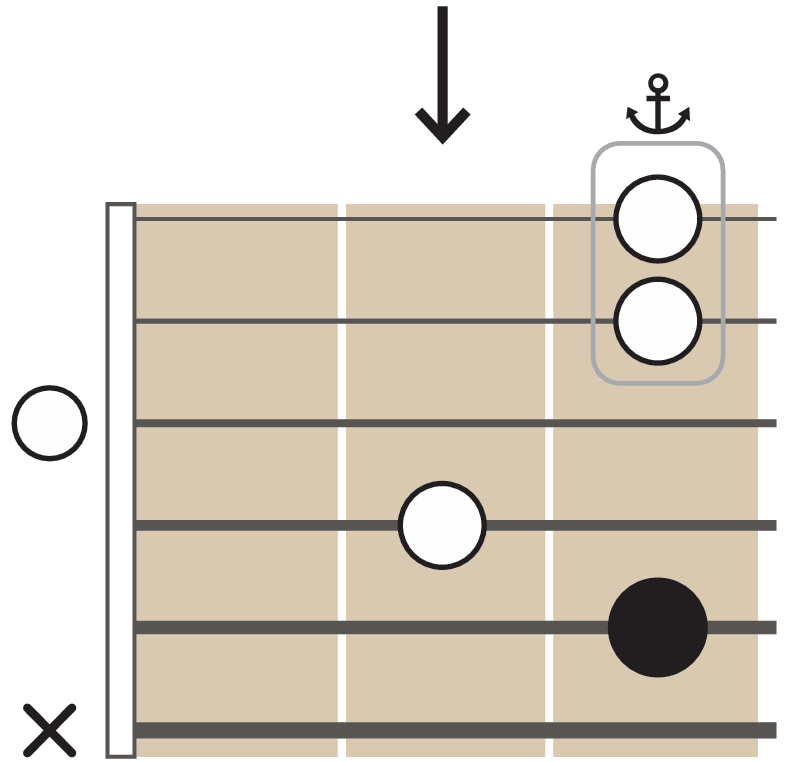
The 4 Chord - C
This is similar to the G. The fingers on the bass strings have moved up one string. Emphasise these to differentiate the two chords. The low E string should not be played. You can let your middle finger on the A string lightly touch the E string to prevent it sounding.
How does it usually sound when you play the Major Scale?
Like a typing test: I just run up and down the notes in order without any real rhythm or feel.
Stuck in the box: I know one comfortable shape, but if I slide up the neck, I get completely lost.
The endless loop: I can play the notes, but I never know which note to land on to make it sound finished.
Total freedom: I can easily turn the scale into actual melodies anywhere on the neck.
If you didn't pick the last option, don't sweat it. Most of us have spent way too long stuck in the exact same spot.
We set up the NoisyClan community specifically to help players break past those brick walls and actually make sense of the neck. Drop by to ask questions, trade tips, and work through it with a group of guitarists on the same page.
Play more.
Shop learning materials | Music learning videos | Keep up with our socials