Beginner Guitar Exercises: Get used to the difference in sound between a Major and minor chord
What Makes a Chord Minor?
Any three-note chord (also known as a triad) uses the intervals 1 - 3 - 5. The difference between a Major and minor chord is that in a minor chord the 3rd interval is flattened, which means it moves down one half-step (one fret).
We indicate this on our diagrams by using a blue 3. For the E chord below, the 3rd is played by fretting the first fret on the G string. In this case, we can make this chord minor by simply lifting this finger off the fretboard and playing the open G string.
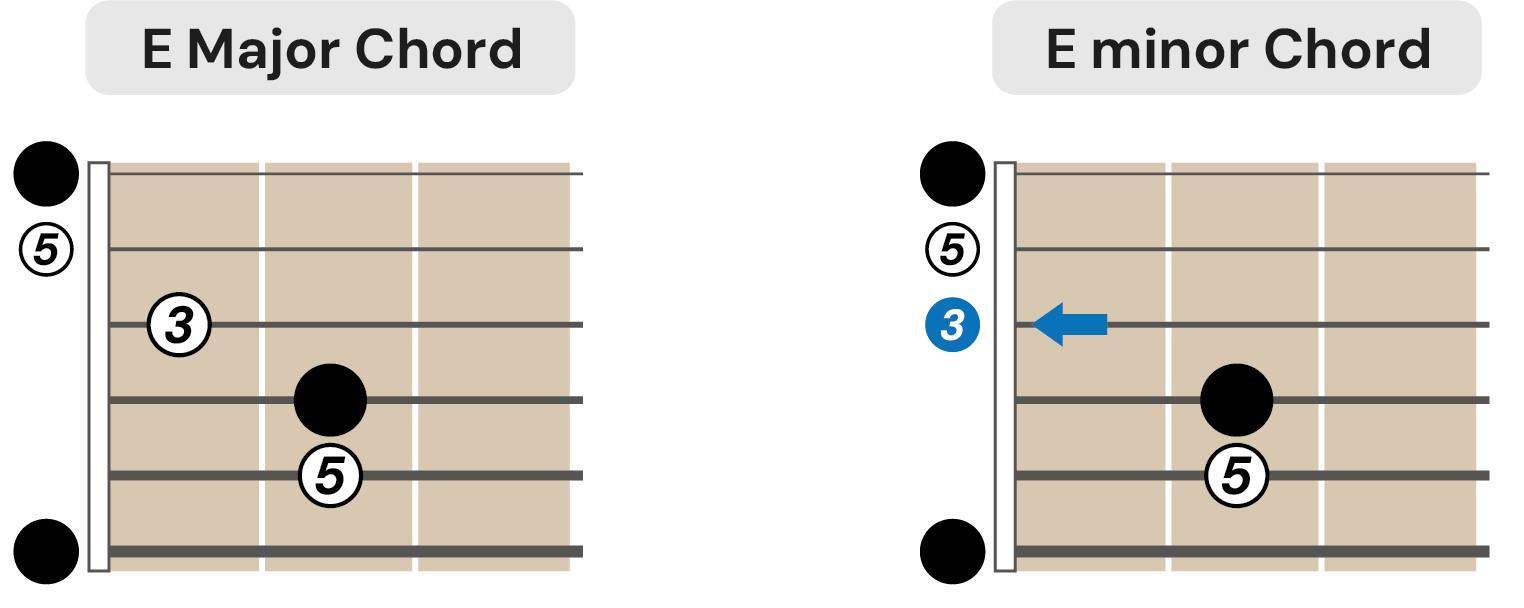
Switch between a Major and minor chord
Try This Out
Play the chord progression D → Dm → D → Dm using the chords shown. Simply move your index finger 1 fret down to play the F natural note. You are lowering the major 3rd interval to the minor 3rd.
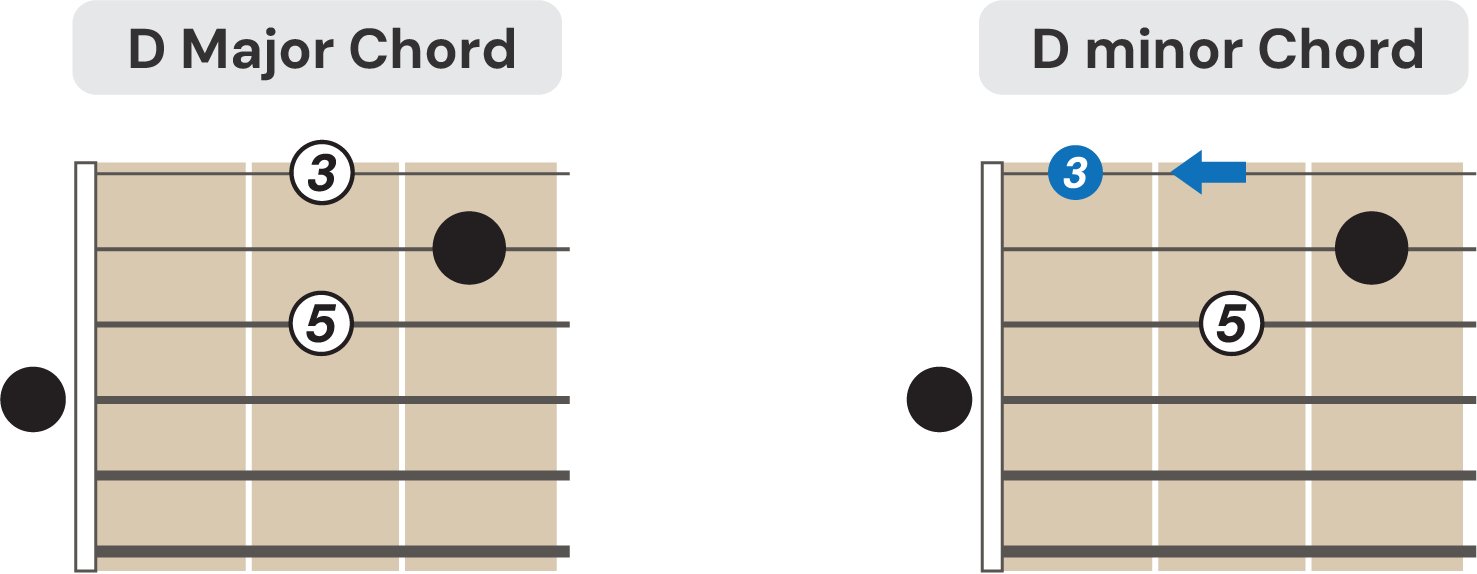
Look at the D chord that you have just learned. Identify where the 3rd is in the chord that you played. Play a D minor by lowering the 3rd by a single fret. Play the D → Dm → D → Dm chord progression. This is harder to fret and make the chord change.
Be honest. How well do you actually know your guitar neck right now?
Total blur: I rely completely on tabs and basic open chords.
Getting there: I know the top two strings, but the middle of the neck is a mystery.
Mostly solid: I know my scale shapes, but I still get lost during solos.
20/20 vision: The whole neck makes complete sense to me.
If you didn't pick the last option, don't sweat it. Most of us have spent way too long stuck in the exact same spot.
We set up the NoisyClan community specifically to help players break past those brick walls and actually make sense of the neck. Drop by to ask questions, trade tips, and work through it with a group of guitarists on the same page.
Play more.
Shop learning materials | Music learning videos | Keep up with our socials