BASS: Compose from the Bass Line Up
Few people imagine the bassist at the forefront when they think about how iconic songs were written, but do you think ‘Seven Nation Army’ or ‘Another One Bites the Dust’ came from the guitarist noodling around? Unlikely. It is totally possible, and in fact often an advantage, for groups and solo artists to compose songs from the bass line up.
Listen to ‘Good Times’ by Chic. Bernard Edwards’ bass line isn’t just keeping time with the root notes, it basically is the track. The guitars and keys play chords over the top, but the bass is the foundation and the hook rolled into one.
chic bass.mp3So why not try starting your own song with the bass?
Step 1: Choose Your Groove
Start by picking a tempo and a feel. Setting the tempo early helps you lock in the energy of your song. Tap your feet, use a metronome, pull in a drummer off the streets, it doesn't matter as long as you have something to play along to that doesn’t take too much concentration from yourself, you need to be in the zone.
Try 80bpm for a moody swagger like ‘New Person, Same Old Mistakes’ by Tame Impala.
Start at 100bpm for a funky feel like ‘Superstition’ by Stevie Wonder.
Crank it up to 120bpm for more of an upbeat driving feel like ‘Billie Jean’ by Micahel Jackson.
Anything quicker than 140bpm works well for a frantic punk sound like ‘Juicebox’ by The Strokes.
Step 2: Pick a Starting Note
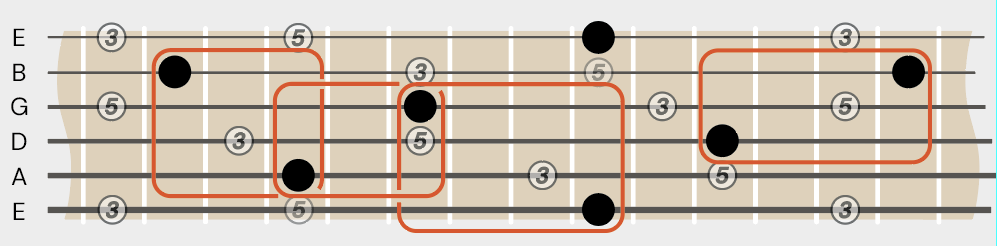
Find a root note that feels good under your fingers. You don’t need a full chord progression yet, just one note that feels like “home”. Play it on different strings, in different octaves, and listen for the tone you like best.
Here’s how to easily move around between octaves on the fretboard:
Step 3: Add Movement
Here’s where things get fun. Take that root note and add a a passing chord tone such as a fifth or a third. We’ve already looked at arpeggio and scale shapes, check these blogs out if you’re struggling, they’ll show you where to go. Even just two or three notes can suggest the mood of the whole song. For example:
Root + Fifth = strong, open, driving
Root + Minor Third = darker, more melancholy
Root + Major Third = brighter, uplifting
Try simple repeating patterns first. Let them loop and see if they feel like they could support a whole verse or chorus.
Step 4: Lock in the Rhythm
The rhythm of your bass line is as important as the notes. A simple shift in where you place accents can turn a straight rock line into a funk groove. Experiment with:
Playing on every beat
Hitting only beats 1 and 3 for a heavy feel
Syncopating for funk and groove
Step 5: Build the Song Around It
Once you’ve got a loop you like, try adding other instruments or humming a melody over it. You might find the bass dictates the chord progression naturally, the other musicians can follow your lead.
This “bass first” method puts a different focus on songwriting, which can create some great results. Instead of the bass filling in the gaps, it’s the backbone of the track. And when you start from a strong, catchy bass line, you’re more than halfway to a song people will remember.
Next week, we’ll look at how bassists can use the Circle of Fifths not just for theory homework, but for real-world playing and writing. Until then, pick up your bass, start looping a groove, and build your next hit from the bottom up.
How to Play More!
There is a lot of info on these that you can find on our Bass Circle of Fifths and Bass Cheat Sheets, and our aim with each one is to give you something that you can just play immediately, learning the theory as you go. Look out for the Bass icons, these basically say:

Play more.
Shop learning materials | Music learning videos | Keep up with our socials