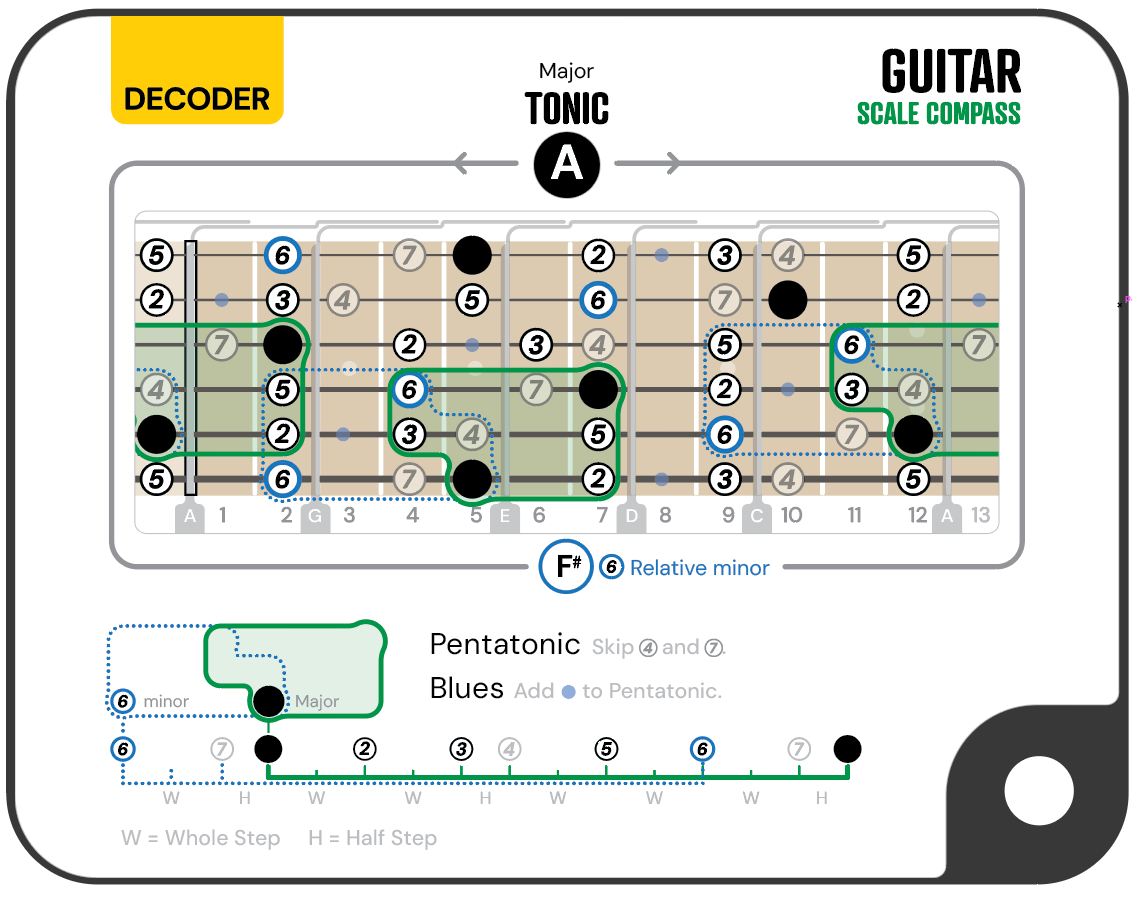
GUITAR SCALES: Break out of the Box!
At a glance: Mix and match the Major and minor scales to create interesting melodies and hooks.
Last week we learned the shape for the minor scale and how it interacts with the Major. Now we’re going to let go of the sides of the pool and wade out into the deep dark waters of the fretboard.
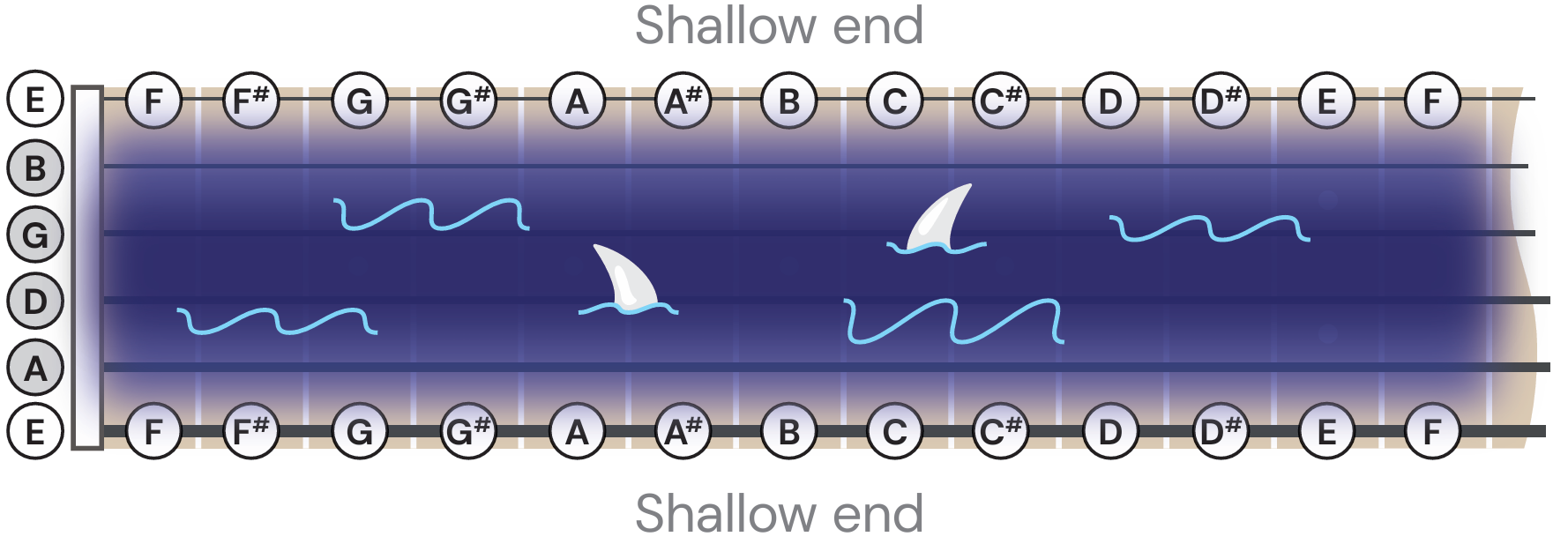
An easy way to make this less intimidating is to have fewer scale degrees to remember. Enter: The pentatonic scales. Pentatonics take away the 4th and 7th scale degrees from the Major scale, and the same intervals from the relative minor. This means there are no half-step intervals in the scale, which makes it great for noodling around and writing solos and licks. It’ll work over almost any chord!
Now let’s go swimming! The scale shapes we have been using are actually just snapshots of the entire scale system across the fretboard. If you’re a video gamer, think of it as the “tutorial island” of learning scales. Now it’s time to branch out into the open world.
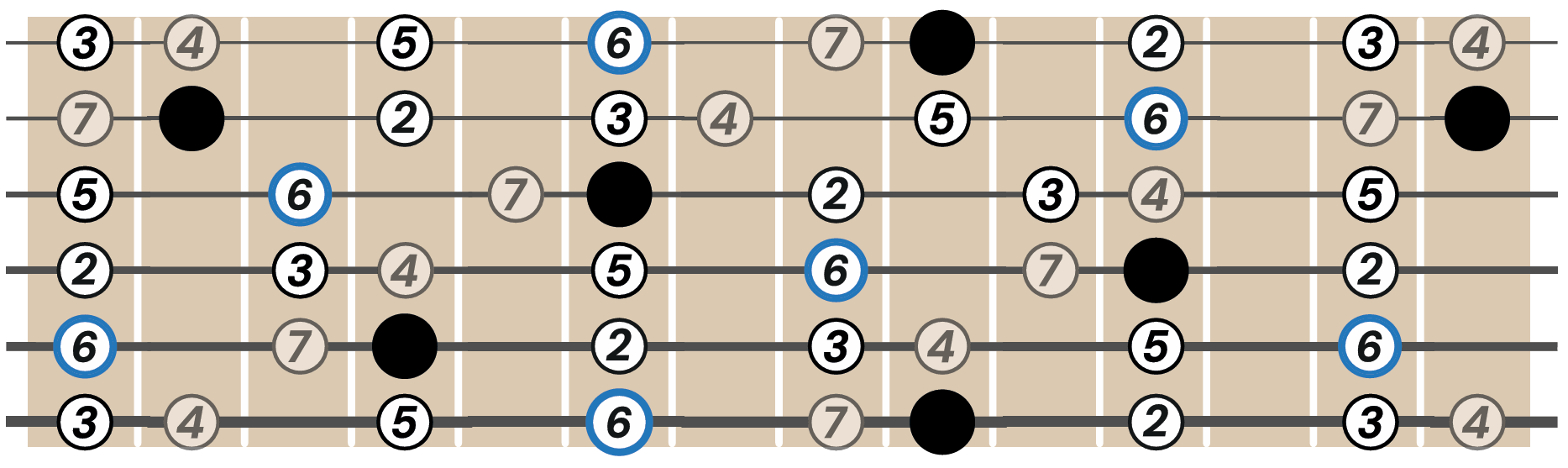
You might be thinking that is a very overwhelming number of intervals to remember, and you’d be right, so let’s look at smaller sections at a time, focusing on starting in the scale boxes and branching out into nearby notes and intervals. This will unlock loads of new scale sounds and voicings for your playing.
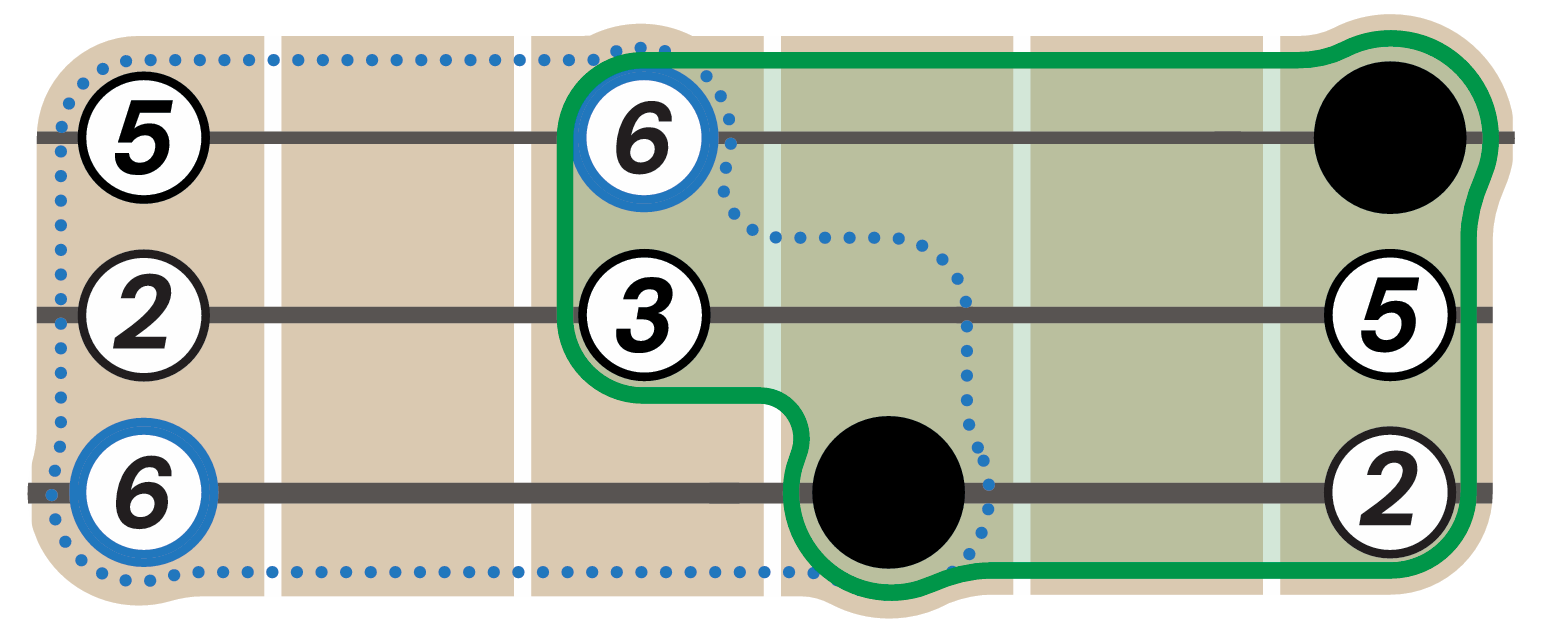
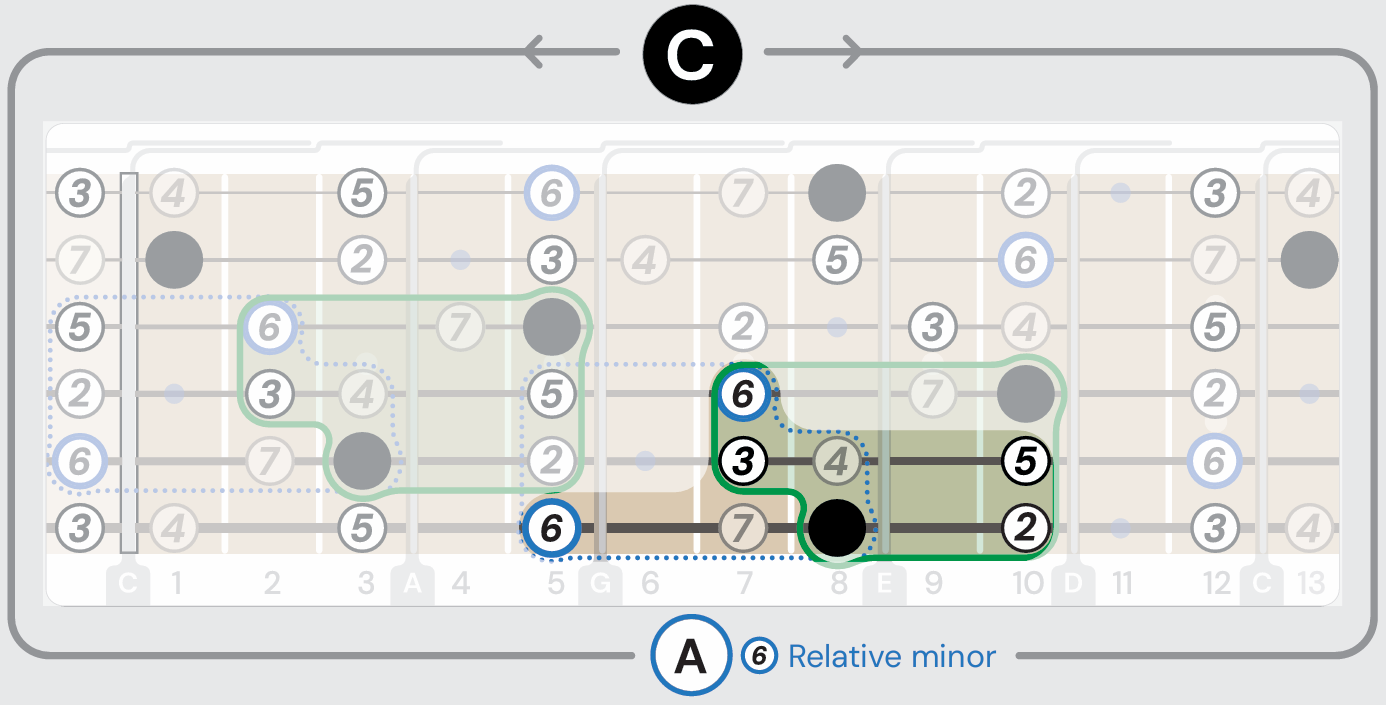
Let’s start with venturing from the minor scale shape into the Major. Play the A minor scale (the relative minor of C Major). Want to play a different scale? Just move the whole shape up or down! You might want to play the tonic note as an open string so you don’t have to move your hands around as much, in this case, you’d be playing the E minor scale, and using parts of the G Major shape.
We can do this the other way around too. Try this shape, starting on G on the 3rd fret, then play the next string open as A. Play the 3rd interval on the A string, then move to the open D string for the 5th interval, ending the scale on the 5th fret of the D string. This Major scale uses open strings from the minor shape while still using only a four-fret span of fretted notes.
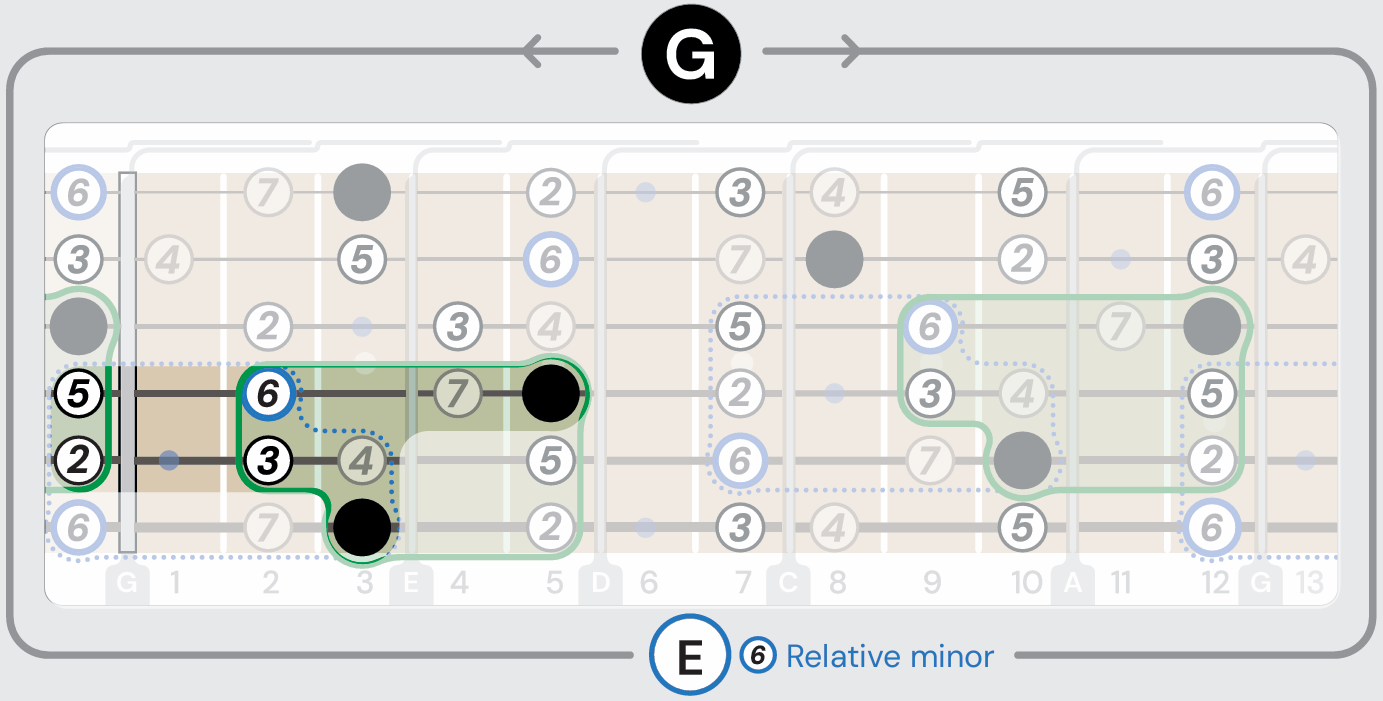
These are only 2 examples of how you can use familiar shapes to reach out into other areas of the fretboard and improve your fretboard knowledge over time.
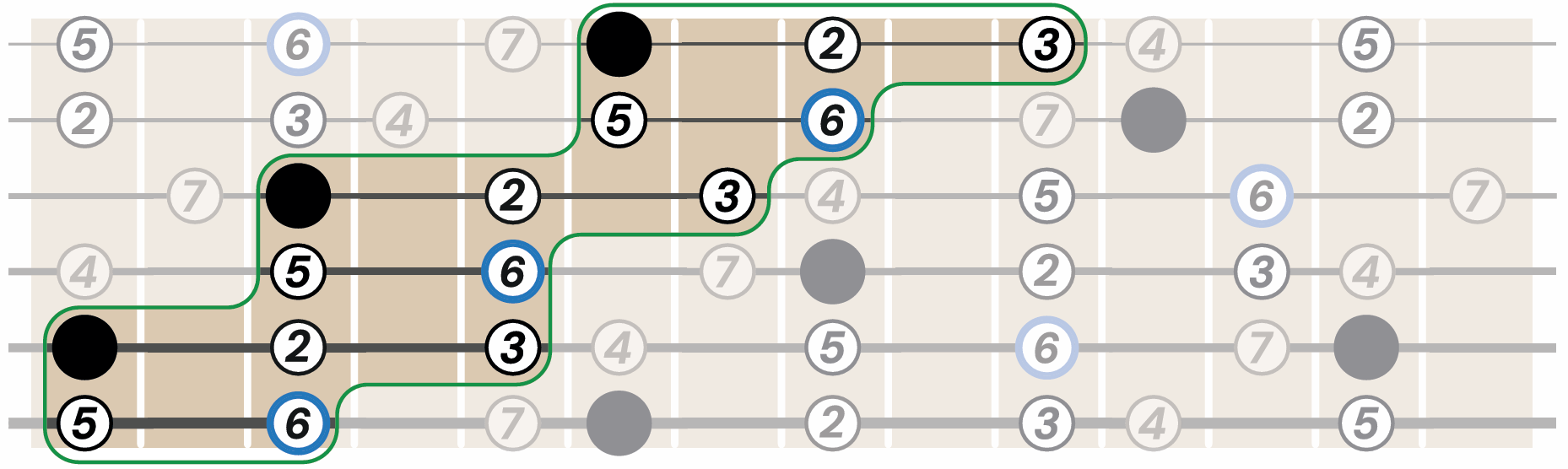
Don’t memorise each note, that won’t actually teach you how to sound good. Instead try an exercise like this, which spreads the pentatonic scale shape out up and down the fretboard. This is the kind of flourish that will have you sounding like a pro before you know it!
Check out last week’s lesson: How the Major and minor scales share the same notes. If you’re hungry for more scale content, we have Scale Compass for Guitar coming out soon! Sign up for email updates and exclusive discounts when it drops!